
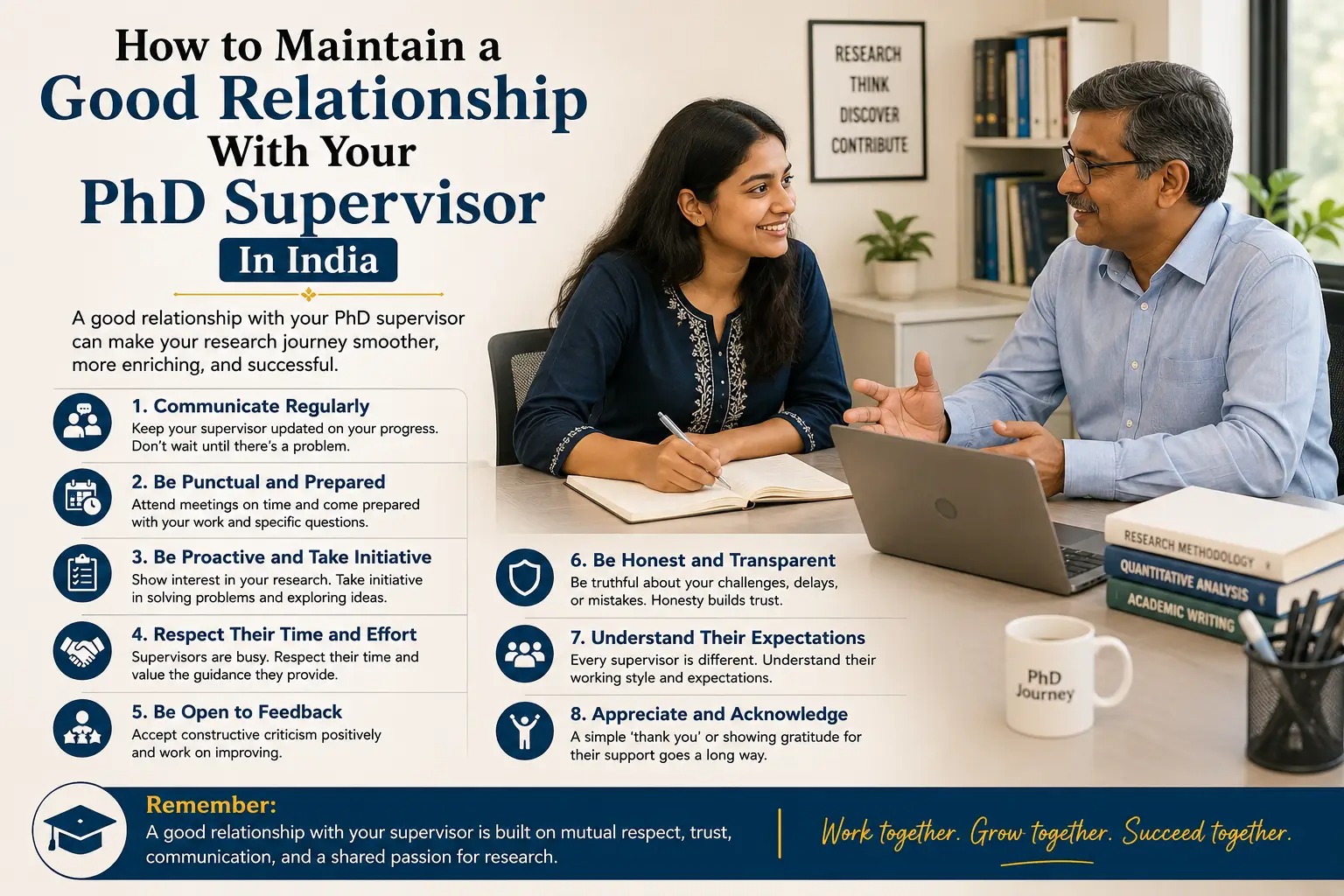
Introduction
A PhD is a long and challenging undertaking. It includes acquiring various skills, whether through research, study, or perseverance, but the one thing that can help a student the most is their PhD supervisor. PhD programs in India can take anywhere between three and six years to complete; if students can avoid or limit any potential disruptions caused by their relationship with their supervisor, it can help them complete their PhD with maximum efficiency.
The role of a PhD supervisor extends beyond that of a teacher. It also includes being the guide to the writing and reviewing of research, helping students overcome hurdles and offering helpful and important advice, and continuing to mentor the student long after the supervisor has helped the student to complete their PhD. Poor communication, misunderstandings, and a supervisor's unrealistic goals can hinder the completion of a student’s PhD.
The goal of a PhD student who has a good relationship with their supervisor should be to ensure that relationship continues to help students. This article offers suggestions to students who want to establish and maintain a good relationship with their supervisor.
Why Supervisor-Scholar Relationships Matter
The PhD student-supervisor relationship plays a significant role in:
- Research and Thesis Progress
- Publication Potential
- Conference and Career Opportunities
- Research Motivation
- Research Mental Health
A supervisor who provides guidance and support is crucial for navigating the challenges presented by research. In contrast, a poor relationship can mean unproductive research and low participation and confidence.
Doctoral research spans several years. Unsurprisingly, a healthy supervisor-scholar relationship is a priority.
Know Your Supervisor's Style
Unmet expectations are one of the most common reasons for PhD conflicts. All supervisors have a different style, some prefer to regularly meet and be updated, while others work very autonomously and only engage when needed.
During the first few weeks of your PhD, find out how your supervisor prefers to:
- Be met/updated
- Be told about and set research milestones
- Be informed of publication goals
- Be shown and notified of deadlines
Clarifying how your supervisor prefers the above is likely to be the best way to avoid conflicts of expectations.
Some Indian universities are making research progress review meetings a standard practice. This helps to manage the expectations of supervisors and scholars.
Communicate, Communicate, Communicate
The key to almost any successful relationship is communication. This is especially true of academic relationships.
Never wait to raise an issue with your supervisor until it becomes a problem.
Always let your supervisor know how:
- Your research is progressing
- You are progressing towards important deadlines
- You are gathering data
- Publication work
- Related challenges
You can show your supervisor that you are a committed, professional researcher just by keeping in contact. Aim for at least a short update each month.
Be Respectful of Their Time
Being a PhD supervisor comes with lots of different duties, including but not limited to:
- Teaching
- Administrative duties
- Research work
- Writing and submitting Grants
- Supervising a number of Researchers
Because of their multiple responsibilities, do not expect your supervisor to reply to your messages and emails immediately.
Do the following before arranging meetings:
- Request the meeting in advance
- Send an agenda in advance
- Be on time
- Bring relevant documents
- Discuss on topic
Putting in the effort to respect your supervisor's time earns their respect and makes the supervising relationship more productive.
Come Prepared for Meetings
Meeting a supervisor unprepared is one of the worst things a student can do.
Some tips to prepare for your meeting include:
- Read over the last meeting notes
- Update your supervisor on your Research
- List and bring your questions and concerns
- Bring any documents you may need
- Be ready to summarize your work for the supervisor
A prepared student is serious and committed to their Research.
A supervisor really appreciates a prepared meeting because it helps make the meeting more productive.
Be Open to Constructive Criticism
Research is a process that relies heavily on the criticism of others, and your supervisor will be one of the first to do this, and they may do the following:
- Critique your method
- Suggest changes
- Reject portions of your Draft
- Suggest more work be done
Criticism, while it may feel negative, is always offered to help you make your work better.
To help you become more resilient to criticism, do the following:
- Be an active listener
- Ask for clarification on things you do not understand
- Change work as suggested
Really, the only way to grow as an academic is with this type of harsh feedback. Many PhD students feel as though their best work was done as a result of this type of feedback coming from their supervisor.
Take Ownership of Your Research
One mistake that a lot of new Researchers make is thinking that the Supervisor will help in resolving all the problems that come up during the Research.
This is not the case, and you are expected to be a lot more independent during your Research when you are working at this level.
This is what you will do:
- Read a lot
- Come up with research ideas
- Be proactive in problem solving
- Manage your time
Taking initiative will show your supervisor that you are capable and responsible. This is essential to develop a good working relationship with your supervisor.
It is good to offer potential solutions to problems instead of only stating the issues.
Always Be Professional
Professionalism is crucial no matter the academic environment in India.
With written communication, take these things into account:
- Always be polite
- No informal text lingo
- Be clear
- Important emails should be free of typos
Good communication shows your commitment to your research. Small habits like an email with a proper closure and a thank you for the feedback will be noticed.
Control Your Emotions During Research Disagreements
Disagreements will happen while conducting research. You will not always see eye to eye on:
- Methodologies
- How to Read Data
- Where and How to Publish
- Thesis layout
When these occur:
- Stay calm
- Present evidence
- Use research to defend your position
- Do not let your emotions get the better of you
Direct your focus to the research and keep opinions out of the discussion.
Respectful disagreements also make a positive contribution to research.
Value Mentorship When Given
Supervisors have the responsibility to work closely with their mentees.
Professional relationships benefit from the acknowledgement of small kindnesses.
The following are examples of incremental steps you can take to acknowledge the contributions of supervisors.
- Acknowledge their kindness in reviewing your writing
- Acknowledge their comments
- Share when their guidance has a positive impact
It's also important to remember that appreciation of kindness does not equal empty praise. Recognizing the contribution of supervisors encourages a respectful relationship.
Discuss Problems When They Arose
Research does not always proceed as planned.
Research can be hindered by:
- Experiment failures
- Issues related to collecting data
- Lack of funding
- Personal/balanced life
Instead of communicating your challenges, the more professional approach is to discuss the challenges as you see them.
The best way to communicate problems that may impact your research is to write your supervisor, and communicate the problems in order to give your supervisor enough time to provide guidance to help you.
Problems that are addressed early become less of a problem; a greater problem is the lack of communicating challenges.
Work Together to Publish
Publishing research papers is an integral element of a PhD program in India.
Research papers require a collaborative effort between stratifying supervisors and students. To that end, make sure you:
- Regularly share drafts and feedback
- Discuss and agree on paper authorship
- Follow the guidelines issued by the Journal of your choice
Publications have a positive impact on research and help both a researcher and their supervisor.
Collaborative publishing usually brings a welcomed component to a relationship.
Create an Environment of Trust
Trust is built by the actions of a supervisor over time.
Some ways to develop trust include:
- Submitting excellent completed work
- Keeping promises
- Being communicative and open
- Being attentive to and acting on critiques
As supervisors develop trust in their students, they create more opportunities for:
- Joint research
- Invitations to present at conferences
- Introductions to professional colleagues and peers
- Recommendations for employment
Nothing is more important to a supervisor relationship than trust.
Recognize Cultural and Institutional Structures in India
In many academic institutions in India, structures and methods are hierarchical.
As a scholar, understanding institutional culture while being a professional is important.
This is inclusive of:
- Adhering to official channels
- Following departmental norms
- Keeping professional distance
- Learning academic etiquette
On the other hand, most modern research is open and collaborative. There must be a balance of respect with self-assurance.
Engage Actively in Research Opportunities
Take the initiative to do more than what is required by your thesis. Engage in:
- Seminars
- Workshops
- Conferences
- Research group meetings
- Events held by your Department
Participation makes you stand out from others and shows that you have a commitment to constructive self-improvement.
Research culture is an essential part of a department, and most supervisors prefer students that help foster good culture in their department.
The Perks of an Excellent Supervisor Relationship Long After Your PhD
A good relationship with a supervisor while doing your PhD has the potential to exceed your time as a PhD student.
Examples of the potential roles that your supervisor can take post-PhD include:
- A research partner
- A collaborator
- A mentor
- A referee for jobs
- A professional connection
Making good connections is one of the most important parts of an academic career and a supervisor that you have a good working relationship during your PhD can help with many other opportunities in your career from your PhD onward.
Conclusion
Successful relationships with PhD supervisors in India contribute significantly to the attainment of PhD goals. Trust, effective communication, accountability, professionalism, and reliability contribute to the supervisory relationship.
Engagement of the scholar to the supervisory relationship is evidenced through respect for the supervisor’s boundaries, consistent commitment to quality work, and a willingness to accept and implement feedback.
The best supervisory partnerships are founded on the willingness to work collaboratively, trust one another, and strive for excellence.
ThesisLikho supports scholars throughout the dissertation process helping them turn research ideas into quality academic contributions that meet university and publication standards.
Contact ThesisLikho
Website: www.ThesisLikho.com
Call/WhatsApp: +91 96438 02216