
Introduction
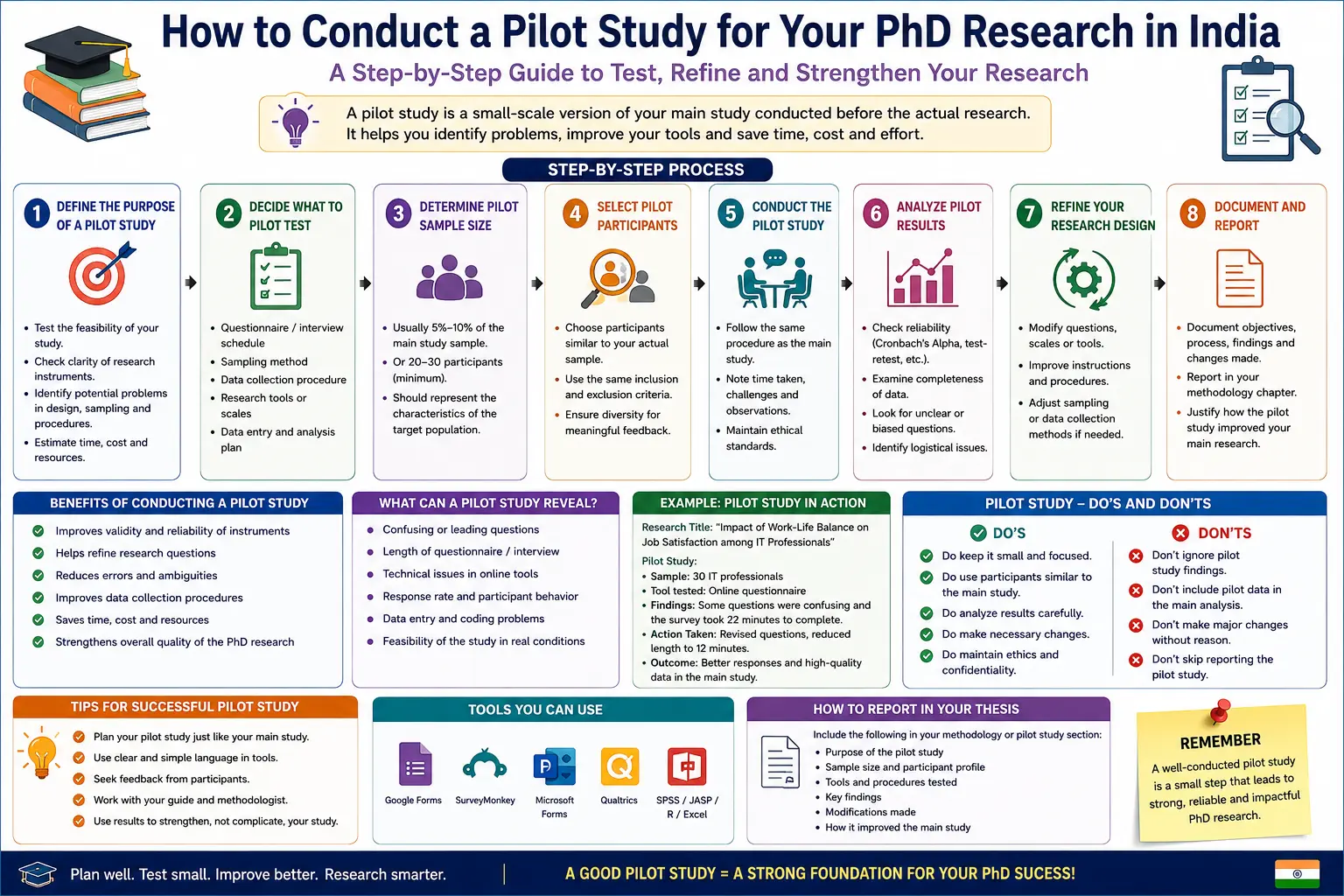
Before investing months or even years into a PhD research project, it is essential to ensure that your research design, data collection tools, and methodology work effectively in real-world conditions. A Pilot Study for PhD Research serves as a small-scale preliminary investigation that helps researchers identify potential problems before conducting the main study.
Many PhD scholars in India underestimate the importance of pilot studies, often proceeding directly to full-scale data collection. However, issues such as unclear questionnaire items, recruitment challenges, unreliable instruments, inappropriate sampling methods, and logistical difficulties can compromise the quality of research if they are not identified early.
A pilot study provides an opportunity to test every aspect of the research process, allowing researchers to refine their methodology, improve data collection instruments, and enhance the overall reliability and validity of their study. This comprehensive guide explains what a pilot study is, why it is important, when to conduct one, and the step-by-step process for carrying out a successful pilot study for your PhD research in India.
What Is a Pilot Study?
A pilot study is a small-scale version of the main research conducted before the actual study begins. Its purpose is to evaluate whether the proposed research design, methodology, instruments, sampling procedures, and data collection process are practical and effective.
Rather than testing the research hypothesis, a pilot study focuses on identifying weaknesses in the research process and making improvements before collecting data from the full sample.
The findings from a pilot study help researchers refine their study and minimize the risk of errors during the main investigation.
Why Is a Pilot Study Important?
Conducting a pilot study offers several benefits that improve the quality of doctoral research.
It helps researchers to:
- Test the feasibility of the research design.
- Evaluate the clarity of questionnaires or interview guides.
- Identify logistical challenges.
- Improve data collection procedures.
- Assess participant recruitment strategies.
- Estimate the time required for data collection.
- Detect technical or administrative issues.
- Improve the reliability and validity of research instruments.
- Reduce the likelihood of costly mistakes during the main study.
- Build confidence before full-scale research.
A well-conducted pilot study saves time, resources, and effort by identifying problems before they become significant.
Objectives of a Pilot Study
A pilot study may have one or more objectives depending on the research design.
Common objectives include:
- Testing research instruments.
- Evaluating data collection methods.
- Assessing participant response rates.
- Examining sampling procedures.
- Measuring data quality.
- Identifying ethical concerns.
- Estimating project timelines.
- Assessing the feasibility of the research methodology.
The goal is to improve the research process rather than produce final research findings.
When Should You Conduct a Pilot Study?
A pilot study should be conducted after completing the research design but before beginning the main data collection.
It is particularly useful when:
- Developing a new questionnaire.
- Designing interview schedules.
- Conducting focus group discussions.
- Using newly developed measurement scales.
- Collecting observational data.
- Testing experimental procedures.
- Implementing mixed methods research.
If the research involves unfamiliar methods or complex procedures, a pilot study becomes even more important.
Types of Pilot Studies
Depending on the research objectives, different types of pilot studies may be conducted.
Internal Pilot Study
An internal pilot forms part of the main study, and the collected data may be included in the final analysis if no major changes are required.
External Pilot Study
An external pilot is conducted separately from the main study. The data collected are used only for testing the methodology and are not included in the final analysis.
Feasibility Pilot Study
This type evaluates whether the proposed study can realistically be completed considering available resources, participants, time, and funding.
Instrument Pilot Study
Focuses specifically on testing research instruments such as questionnaires, interview guides, observation checklists, or psychological scales.
Key Components of a Pilot Study
A pilot study generally examines the following elements:
- Research objectives
- Research design
- Sampling strategy
- Recruitment procedures
- Data collection instruments
- Data collection process
- Data management
- Ethical procedures
- Statistical analysis plan
- Reporting process
Testing these components improves the overall quality of the main research.
Step-by-Step Guide to Conducting a Pilot Study
Step 1: Define the Purpose of the Pilot Study
Begin by identifying what you want to evaluate.
Examples include:
- Testing questionnaire clarity.
- Evaluating interview duration.
- Assessing participant recruitment.
- Identifying technical issues.
- Measuring instrument reliability.
A clearly defined purpose guides the entire pilot study.
Step 2: Develop the Research Instruments
Prepare the same instruments that will be used in the main study.
These may include:
- Questionnaires
- Interview schedules
- Observation forms
- Assessment scales
- Experimental protocols
Using the actual research instruments provides realistic feedback.
Step 3: Select a Pilot Sample
Choose participants who are similar to those in your main study.
The pilot sample should represent the target population as closely as possible.
Although there is no universally accepted sample size, pilot studies commonly involve a relatively small number of participants sufficient to identify methodological issues.
The emphasis is on testing procedures rather than producing statistically representative results.
Step 4: Obtain Ethical Approval
If required by your institution, obtain ethical approval before conducting the pilot study.
Researchers should also:
- Obtain informed consent.
- Protect participant confidentiality.
- Explain the purpose of the pilot.
- Allow voluntary participation.
- Ensure secure data storage.
Ethical considerations remain important even in preliminary studies.
Step 5: Conduct Data Collection
Collect data exactly as planned for the main study.
Observe:
- Time required.
- Participant understanding.
- Technical issues.
- Missing responses.
- Difficult questions.
- Administrative challenges.
Avoid making changes during data collection unless absolutely necessary.
Step 6: Evaluate the Research Instruments
After data collection, examine whether the instruments functioned effectively.
Consider:
- Were questions clear?
- Were instructions understandable?
- Did participants misunderstand any items?
- Were important topics missing?
- Were response options appropriate?
Feedback from participants can be highly valuable at this stage.
Step 7: Analyze the Pilot Data
Analyze the collected data using the same methods planned for the main study.
For quantitative studies, evaluate:
- Missing values.
- Descriptive statistics.
- Reliability measures (such as Cronbach's Alpha where appropriate).
- Distribution of responses.
- Data entry procedures.
For qualitative studies, assess:
- Richness of responses.
- Clarity of interview questions.
- Emerging themes.
- Effectiveness of prompts.
The objective is to evaluate the research process rather than draw substantive conclusions.
Step 8: Identify Problems
Review every stage of the pilot study to identify potential issues.
Common problems include:
- Ambiguous questions.
- Low response rates.
- Technical difficulties.
- Participant fatigue.
- Inadequate sampling procedures.
- Poor instrument reliability.
- Data management challenges.
Document each issue carefully.
Step 9: Revise the Research Design
Modify the research design based on pilot findings.
Possible revisions include:
- Rewriting questionnaire items.
- Removing confusing questions.
- Improving interview guides.
- Adjusting sampling methods.
- Changing recruitment procedures.
- Revising timelines.
- Updating data collection protocols.
Changes should improve the quality of the main study.
Step 10: Document the Pilot Study
Prepare a clear record of the pilot study, including:
- Objectives.
- Participants.
- Procedures.
- Results.
- Identified problems.
- Revisions made.
- Lessons learned.
Many universities expect researchers to describe the pilot study in the methodology chapter of their thesis.
Sample Size for a Pilot Study
There is no single recommended sample size for all pilot studies.
The appropriate size depends on:
- Research design.
- Study objectives.
- Population characteristics.
- Type of data collection.
- Available resources.
The primary goal is to test the feasibility of the research process rather than achieve statistical power.
Researchers should justify the chosen pilot sample size in their methodology.
Advantages of Conducting a Pilot Study
A pilot study offers numerous advantages for PhD researchers.
These include:
- Improves research design.
- Enhances instrument reliability.
- Increases validity.
- Reduces research errors.
- Improves participant recruitment.
- Saves time during the main study.
- Identifies logistical challenges.
- Supports ethical compliance.
- Strengthens data quality.
- Builds researcher confidence.
These benefits contribute to more robust and credible doctoral research.
Limitations of a Pilot Study
Despite its usefulness, a pilot study has some limitations.
These include:
- Additional time requirements.
- Increased research costs.
- Small sample sizes.
- Results are generally not intended for hypothesis testing.
- Major methodological changes may require repeating the pilot.
Understanding these limitations helps researchers plan effectively.
Common Mistakes to Avoid
Researchers should avoid the following mistakes:
- Skipping the pilot study entirely.
- Using participants who differ substantially from the target population.
- Ignoring participant feedback.
- Making undocumented changes.
- Using pilot data inappropriately in the main analysis.
- Changing research objectives after the pilot without justification.
- Failing to evaluate instrument reliability.
- Not documenting revisions made after the pilot.
Avoiding these mistakes improves research quality and transparency.
Best Practices for Conducting a Pilot Study
To conduct an effective pilot study:
- Plan the pilot as carefully as the main study.
- Use the same procedures intended for the full research.
- Keep detailed records of observations.
- Seek participant feedback.
- Evaluate every stage of the research process.
- Revise instruments based on evidence.
- Maintain ethical standards.
- Discuss pilot findings with your research supervisor.
- Document all methodological improvements.
- Update your research protocol before the main study begins.
These practices increase the likelihood of a successful research project.
Tips for PhD Students in India
If you are conducting doctoral research in India:
- Check whether your university requires a pilot study.
- Conduct the pilot before applying the final research instrument.
- Ensure participants resemble the target population.
- Allocate sufficient time for revisions.
- Keep copies of all pilot study documents.
- Explain methodological changes clearly in your thesis.
- Maintain confidentiality throughout the pilot.
- Use pilot findings to strengthen the final research design.
These recommendations improve both the quality and credibility of doctoral research.
Frequently Asked Questions (FAQs)
What is a pilot study in research?
A pilot study is a small-scale preliminary study conducted before the main research to test the feasibility of the research design, methods, and data collection instruments.
Why is a pilot study important for a PhD?
It helps identify methodological problems, improve research instruments, refine procedures, and reduce the risk of errors during the main study.
Is a pilot study mandatory for every PhD?
Not always. Whether a pilot study is required depends on the research design, university guidelines, and the nature of the study. However, it is strongly recommended when developing new instruments or testing unfamiliar methods.
Can pilot study data be included in the main study?
It depends on the research design. In an internal pilot, data may be included if no significant changes are made. In an external pilot, the data are typically excluded from the final analysis.
What should be evaluated in a pilot study?
Researchers should evaluate the feasibility of the methodology, clarity of research instruments, recruitment procedures, data collection process, ethical considerations, and analysis plan.
How should a pilot study be reported in a thesis?
The methodology chapter should briefly describe the pilot study's objectives, participants, procedures, findings, and any modifications made to the main study based on the results.
Conclusion
A Pilot Study for PhD Research is a valuable step that allows researchers to test and refine every aspect of their research before beginning the main investigation. By evaluating research instruments, sampling strategies, data collection procedures, and overall feasibility, a pilot study helps identify potential challenges early and improves the reliability, validity, and quality of the final research.
For PhD scholars in India, investing time in a well-planned pilot study can prevent costly errors, strengthen the research methodology, and increase confidence in the study's outcomes. A carefully documented pilot study not only enhances the credibility of the thesis but also demonstrates methodological rigor expected in high-quality academic research.
Website: www.thesislikho.com
Call/WhatsApp: +91 96438 02216