
Introduction
Research in the Arts and Humanities does not seek to establish universal physical laws or derive uniform quantitative measurements. Instead, it explores the vast terrain of human experience, cultural production, historical transformation, philosophical reasoning, artistic expression, and textual meaning. Where the natural sciences ask "How does this phenomenon function?", humanistic inquiry asks "What does this text, artifact, or phenomenon signify, and how is meaning constructed within its cultural and historical context?"
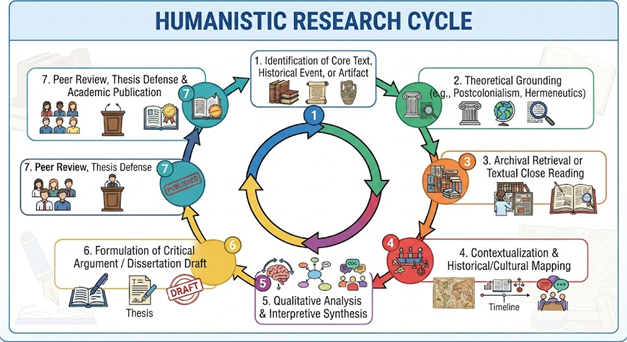
Developing a rigorous methodology in the humanities requires a deep understanding of interpretive frameworks, critical theory, and archival principles. Because humanistic data is typically qualitative, historical, visual, or discursive, establishing scholarly credibility depends on conceptual clarity, logical coherence, and meticulous textual analysis.
This comprehensive guide examines the core methodological frameworks of humanistic inquiry, detailing critical hermeneutics, archival practices, qualitative methodologies, structural organization, and the academic research support provided by ThesisLikho.com.
1. Defining Research Methodology in the Humanities
In humanistic disciplines—such as Literature, History, Philosophy, Cultural Studies, Fine Arts, and Linguistics—methodology refers to the theoretical lens and analytical framework through which text, history, culture, and art are interpreted.
Theoretical Framework vs. Methodological Approach
- Theoretical Framework: The intellectual paradigm or lens that informs your perspective (e.g., Marxism, Structuralism, Feminism, Postcolonial Theory, Critical Race Theory).
- Methodological Approach: The concrete analytical tools and steps used to evaluate sources (e.g., archival analysis, discourse analysis, iconographic examination, philosophical deconstruction).
2. Core Methodological Frameworks in Arts & Humanities
Choosing an appropriate methodological framework is essential for structuring a humanities dissertation or research paper. Below are the primary methodologies used across humanistic disciplines.
1. Textual Hermeneutics and Close Reading
Literary studies and textual analysis rely heavily on hermeneutics—the theory and methodology of interpretation.
- Close Reading (Explication de Texte): The fine-grained analysis of word choice, syntax, metaphor, narrative structure, and rhetorical devices within a primary text.
- Discourse Analysis: Examining how language constructs social reality, power dynamics, and institutional authority (influenced by Michel Foucault).
- Deconstruction: Tracing internal contradictions, ambiguities, and destabilized meanings within textual structures (associated with Jacques Derrida).
2. Historical Method and Archival Inquiry
Historical methodology requires systematic analysis of primary sources (letters, government documents, diaries, oral histories) alongside critical evaluation of secondary historiography.
- Source Criticism: Evaluating primary materials through external criticism (authenticity, provenance, date) and internal criticism (bias, intent, reliability).
- Historiography: Analyzing how historical interpretations have shifted over time, identifying gaps in existing historical narratives.
- Oral History Frameworks: Collecting and analyzing recorded interviews to document marginalized voices, requiring clear protocols for ethical consent and transcript validation.
3. Philosophical Analysis and Conceptual Deconstruction
In philosophy and intellectual history, research methods center on logical argumentation and conceptual analysis.
- Conceptual Analysis: Breaking down complex ideas (such as justice, consciousness, or freedom) into their constituent elements to evaluate logical consistency.
- Phenomenology: Investigating the structures of conscious experience from a first-person perspective (developed by Husserl and Heidegger).
- Dialectical Method: Examining contradictory arguments to reach a higher synthesis (Hegelian and Marxist paradigms).
4. Visual Culture, Iconography, and Performance Studies
In Art History, Media Studies, and Performance Studies, research focuses on non-textual cultural artifacts.
- Panofsky’s Iconographic Method: A three-tiered framework for analyzing visual art:
- Pre-iconographical description: Basic physical forms and subject matter.
- Iconographical analysis: Conventional symbolism and narrative allegories.
- Iconological interpretation: Uncovering underlying cultural, political, and worldviews.
- Semiotic Analysis: Analyzing how signs, symbols, and visual codes generate meaning (utilizing concepts from Charles Sanders Peirce and Roland Barthes).
3. Qualitative Research Techniques in Cultural & Performing Arts
When research intersects with contemporary culture, performance, or folklore, researchers frequently incorporate qualitative methods from the social sciences.
Qualitative Approaches
- Participant Observation & Performance Ethnography: Documenting cultural rituals, theater practices, or musical traditions through immersive field observations.
- Comparative Methodologies: Analyzing texts, artistic works, or historical events across different cultural, national, or temporal contexts to identify patterns and divergences.
- Practice-Led Research (Creative Arts): Combining creative production (such as novel writing, filmmaking, or studio art) with a critical academic commentary explaining the research process.
4. Structuring a Humanities Methodology Chapter
Unlike science dissertations with standardized "Lab/Methods" sections, a humanities methodology chapter must explicitly articulate theoretical perspectives, primary sources, and analytical frameworks.
- Research Rationale & Objectives: Clearly state your primary research questions and explain why your chosen theoretical lens is suitable.
- Definition of Corpus / Primary Sources: Detail your selected texts, historical archives, visual artifacts, or field sites, justifying your inclusion criteria.
- Theoretical Framework: Explain your core theoretical concepts (e.g., Said's Orientalism, Butler's Gender Performativity) and demonstrate how they guide your interpretation.
- Analytical Procedure: Step-by-step account of how you conduct close reading, archival cataloging, or discourse analysis.
- Limitations and Scope: Acknowledge temporal, linguistic, or archival constraints, defining the precise scope of your study.
5. How ThesisLikho.com Supports Humanities Researchers
Humanities researchers often face challenges like organizing vast amounts of qualitative data, refining abstract theoretical frameworks, and maintaining a cohesive academic argument across lengthy chapters. ThesisLikho.com offers specialized academic support tailored to humanistic scholarship.
Specialized Humanities Services from ThesisLikho.com
- Theoretical Grounding & Literature Reviews: ThesisLikho connects scholars with subject-matter experts in English Literature, History, Philosophy, and Cultural Studies to build rigorous theoretical frameworks and historiographical reviews.
- Qualitative Data Structuring & Synthesis: Whether organizing archival findings, categorizing qualitative interview transcripts, or analyzing visual media, ThesisLikho helps streamline qualitative research materials.
- Citation Style & Academic Standards: Different humanities disciplines require strict adherence to citation styles (MLA 9th Ed., Chicago Manual of Style Notes & Bibliography, Harvard, APA). ThesisLikho ensures every citation, footnote, and bibliography meets university requirements.
- Plagiarism Auditing & Language Polishing: ThesisLikho provides detailed Turnitin similarity checks and professional academic editing, ensuring your writing is polished, original, and free of structural errors.
By providing guidance on theoretical frameworks and qualitative organization, ThesisLikho.com empowers humanities researchers to produce articulate, well-argued, and publishable work.
Conclusion
A well-crafted methodology in the Arts and Humanities provides the structural foundation for meaningful cultural, historical, and textual analysis. By establishing clear theoretical frameworks, applying structured qualitative or archival methods, and maintaining high standards of academic writing, researchers can contribute valuable insights to the humanistic tradition.
📞 WhatsApp: +91 96438 02216
🌐 Website: https://thesislikho.com