
Beyond the Central Hub: The "Octopus" Model
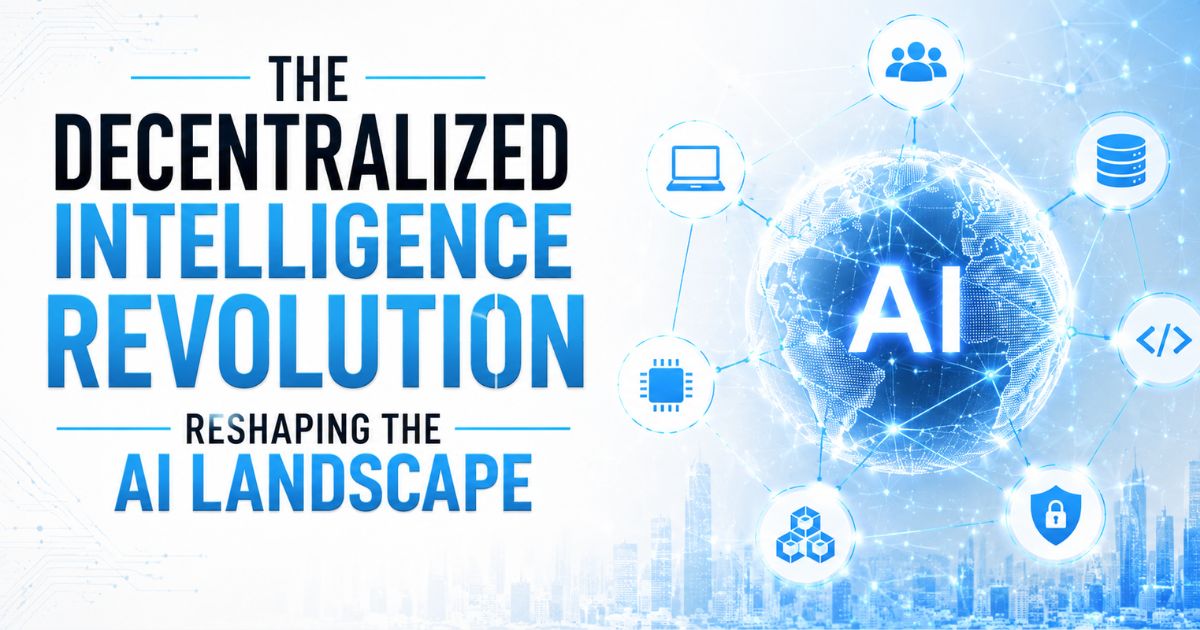
The most compelling trend in 2026 is the adoption of what researchers now call the "Octopus Model" of intelligence. Much like an octopus processes information through its distributed neural network in its tentacles rather than relying solely on a central brain, AI systems are increasingly distributing intelligence across the "edge." By pushing computation to phones, industrial sensors, and local servers, these systems reduce latency, avoid outages, and—most importantly—ensure that decision-making happens where the data lives.
This shift is largely driven by advancements in Federated Learning. Organizations in highly sensitive sectors like healthcare and finance are finding that they can train highly capable models without ever centralizing raw data. Instead of pulling patient records into a massive, vulnerable server, these systems send the "knowledge" (the learned parameters) to a global model while the private data remains securely behind local firewalls. This isn't just a privacy feature; it is the only way to perform meaningful AI work in markets governed by strict residency policies and data privacy regulations.
Solving the "Bottleneck" in Collective Intelligence
One of the most exciting technical breakthroughs, highlighted in recent NTT Laboratories research accepted for ICML 2026, is the resolution of communication delays in decentralized networks. Previously, the "bottleneck effect"—where slower nodes stalled the progress of the entire network—prevented decentralized learning from matching the efficiency of centralized training. By implementing novel node-assignment algorithms (such as BTSP-MSR), researchers have found ways to minimize communication overhead, allowing decentralized systems to approximate the performance of fully averaged, centralized models at a fraction of the cost and with significantly higher resilience.
Furthermore, blockchain technology has emerged as the essential "trust layer" for this collective intelligence. Smart contracts now automatically handle the rewards, governance, and audit trails for participants in these networks. Whether it's a neighborhood energy grid rebalancing itself or a group of researchers training a drug-discovery model without sharing proprietary molecular data, blockchain ensures that every contribution is verified, incentivized, and transparently recorded.
The Future of "Useful Work"
The academic and industrial focus for the second half of 2026 is shifting toward "Proof of Useful Work." We are moving away from energy-intensive, speculative mining toward incentive structures that reward computational nodes for genuine progress in AI training and validation. This is creating a sustainable economic loop: contributors earn tokens for the actual value they provide to the collective intelligence, effectively lowering the cost of high-end AI research by up to 80% compared to traditional, vendor-locked cloud providers.
For scholars and researchers, this is a call to action. We are no longer limited by the resources of the largest tech companies; we are entering an era of "open innovation," where collective intelligence can be built by anyone, anywhere, provided they have the tools to connect and contribute.
How Thesislikho Can Help Your Research
Researching the decentralized AI frontier requires a rare blend of expertise in distributed systems, cryptography, machine learning, and economics. For a new researcher, this can be an intimidating landscape to navigate, but it is also one of the most promising areas for a high-impact thesis or dissertation.
Thesislikho.com is your academic research partner, designed to bridge the gap between complex technological theory and the formal requirements of a submission-ready thesis:
- Architectural Strategy: If you are building or analyzing a decentralized network, our consultants help you define a clean, logical scope for your research, ensuring your system architecture is both theoretically sound and practically feasible.
- Methodological Rigor: From validating your consensus mechanisms to structuring your simulation results, we provide the technical depth required to ensure your findings are reproducible and statistically robust.
- Literature Synthesis: With the field of "DeAI" evolving weekly, we help you identify the most relevant, high-impact research gaps, ensuring your work contributes genuinely original insights to the field.
- Professional Academic Presentation: Whether you are following IEEE/ACM technical reporting standards or complex journal guidelines, we ensure your thesis is formatted to perfection, allowing you to focus on the content of your research rather than the administrative burden.
If you are currently exploring the future of decentralized systems, do not navigate these complex waters alone. The expertise at Thesislikho.com is built to help you turn your most ambitious ideas into finished, impactful research that stands up to the scrutiny of the global academic community.
As you look toward the future of AI, which do you believe is the more critical research frontier: optimizing the efficiency of decentralized communication nodes, or perfecting the incentive structures that ensure honest data contribution in a trustless environment?
Call / WhatsApp: +91 96438 02216
Visit:ThesisLikho.com