
The Marriage of Mechanics and Machine Learning
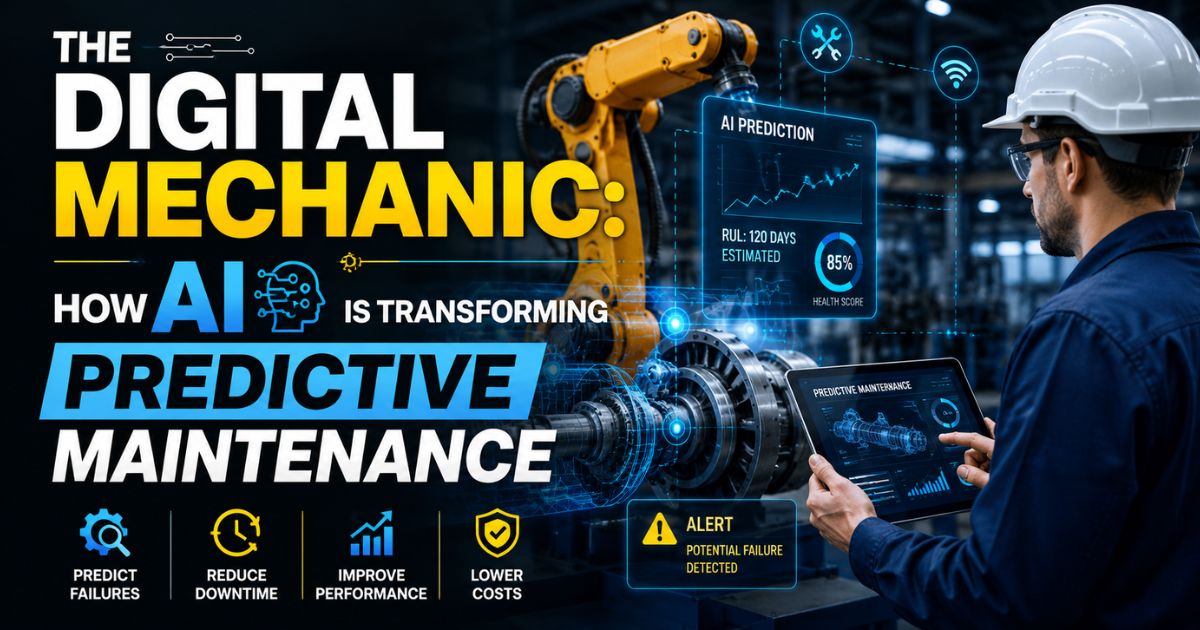
The core of this transformation lies in Predictive Maintenance (PdM). By embedding sensors—vibration monitors, thermal cameras, and acoustic emitters—directly into heavy machinery, mechanical engineers are now collecting massive datasets on how components perform in real-time.
However, raw data is useless without context. This is where AI excels. Advanced machine learning algorithms can now process this stream of data to detect the subtle, "micro-oscillations" in a motor’s vibration that precede a bearing failure by weeks.
Consider the recent breakthroughs in Digital Twin technology. By creating a high-fidelity virtual replica of a physical machine, AI can simulate thousands of "what-if" scenarios. It predicts how a mechanical component will degrade under specific stress conditions, allowing engineers to optimize the design before a single piece of metal is cut.
Why This Matters
For the mechanical engineer of today, the toolkit has expanded. It is no longer just about CAD software and material strength calculations; it’s about understanding the synergy between kinetic movement and neural networks. This convergence allows for:
- Reduced Downtime: Machines tell you exactly when they need service, eliminating the waste of premature replacements.
- Energy Efficiency: AI algorithms optimize machine load in real-time, reducing the carbon footprint of industrial operations.
- Life-Cycle Management: Engineers can design parts with "self-aware" properties, where materials are chosen based on how their structural integrity will be monitored by AI over time.
This represents a pivot in engineering philosophy: we are no longer just designing machines; we are designing "intelligent ecosystems."
Mastering the Intersection of AI and Mechanical Engineering with Thesislikho.com
As the line between mechanical engineering and computer science continues to blur, academic research in this field has become increasingly interdisciplinary. Tackling a thesis that requires both advanced mechanical modeling and AI-driven analysis is a monumental task.
The team at Thesislikho.com understands that the bridge between these two domains is complex, and they provide the specialized academic support necessary to bring your research to completion.
How Thesislikho Elevates Your Technical Research
Whether you are exploring robotics, fluid dynamics, or structural health monitoring, Thesislikho acts as your technical consultant and academic strategist:
- Interdisciplinary Research Formulation: If you are struggling to integrate AI frameworks (like TensorFlow or PyTorch) into your mechanical models (like FEA or CFD), their experts help you define the scope so your thesis remains focused and academically rigorous.
- Data Analysis & Simulation Support: They provide guidance on processing large-scale sensor data or setting up simulations that prove the efficacy of your AI-driven mechanical designs.
- Technical Documentation: Writing a paper that discusses both the hardware (the "mechanical") and the software (the "AI") requires a unique writing style. They help you craft a narrative that appeals to both engineering committees and data science reviewers.
- Simulation Verification: The team assists in validating your findings against industry standards, ensuring your conclusions are not just theoretical, but practically applicable in a modern engineering context.
- Structure & Formatting: They ensure your thesis adheres to strict formatting guidelines (IEEE, ASME, etc.) and that your code repositories and technical appendices are presented with professional clarity.
If you are currently working on a thesis that sits at the cutting edge of AI and mechanical engineering, do not navigate the complexities alone. The team at Thesislikho.com has the technical depth to help you translate your innovative engineering concepts into a high-impact, submission-ready document.
As you refine your focus on AI-driven mechanical systems, what is the biggest technical bottleneck you are facing in integrating data-driven models into your traditional engineering designs?
Call / WhatsApp: +91 96438 02216
Visit:ThesisLikho.com