
Introduction
The world of work has undergone seismic shifts in recent decades, from the standardized factory floors that dominated the twentieth century to today's hybrid workspaces, digital collaboration tools, and gig economies. Yet amidst these transformations, one discipline has consistently endeavored to understand the complex relationships between people, their work, and organizational systems: occupational psychology. Also known as organizational psychology or work psychology, this field represents a critical intersection of human behavior, organizational management, and societal well-being.
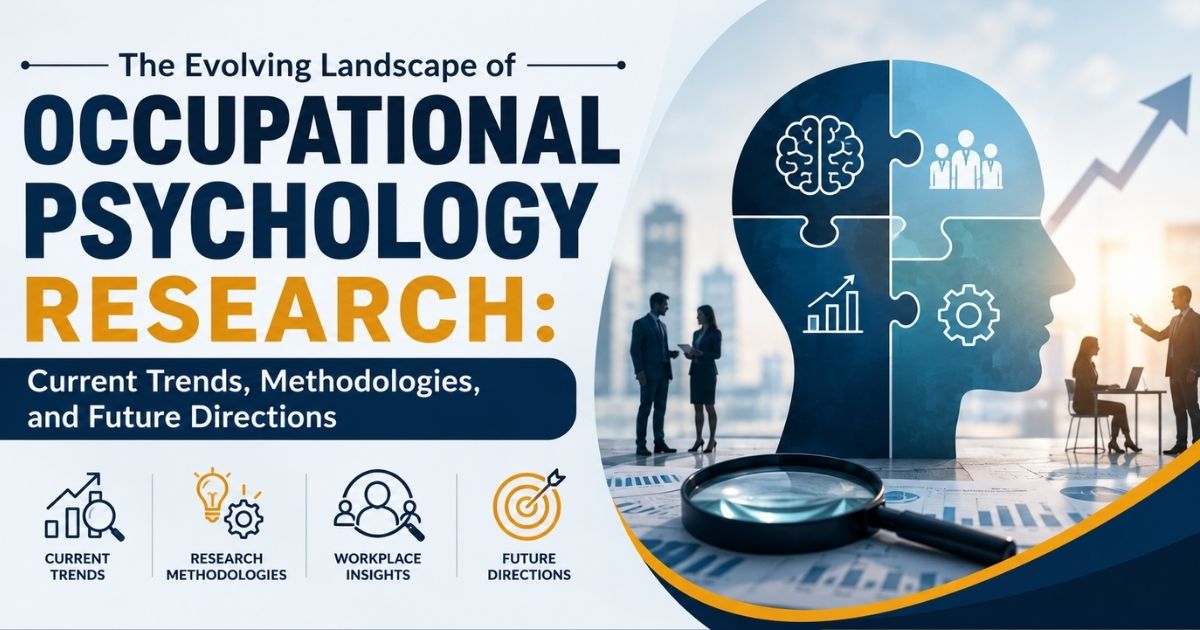
Occupational psychology research has never been more relevant. As organizations grapple with employee mental health crises, talent shortages, diversity and inclusion challenges, and the accelerating pace of technological change, the insights gleaned from rigorous occupational psychology research provide invaluable guidance for creating healthier, more productive, and more equitable workplaces. This article explores the contemporary landscape of occupational psychology research, examining its core domains, methodological approaches, emerging trends, and the profound implications these investigations hold for the future of work.
Defining Occupational Psychology: Scope and Historical Context
Occupational psychology is fundamentally concerned with understanding human behavior in work contexts and applying psychological knowledge to improve both individual well-being and organizational effectiveness. The field emerged in the early twentieth century, initially focused on personnel selection and task efficiency—what we might now recognize as industrial psychology. However, contemporary occupational psychology has expanded dramatically to encompass psychological health, organizational culture, leadership dynamics, change management, and the intricate social systems that characterize modern enterprises.
The distinction between occupational psychology and its adjacent disciplines is important. While human resources management focuses primarily on organizational processes and policies, occupational psychology brings a distinctly psychological lens—examining motivation, cognition, emotion, and behavior at individual, team, and organizational levels. Similarly, while organizational behavior draws from multiple disciplines including sociology and management theory, occupational psychology centers human psychological processes.
Today's occupational psychology research acknowledges that workplaces are not simply economic entities but social and psychological systems where individuals seek meaning, connection, growth, and security alongside compensation. This holistic perspective has become increasingly central to the field's research agenda.
Key Domains of Contemporary Research
Workplace Mental Health and Well-being
Perhaps no area of occupational psychology has gained more momentum than research into workplace mental health and psychological well-being. The global prevalence of stress-related disorders, burnout, and anxiety in professional environments has prompted intensive investigation into the factors that protect or undermine worker mental health.
Recent research emphasizes the distinction between hedonic well-being (happiness and life satisfaction) and eudaimonic well-being (meaning, purpose, and flourishing). Studies reveal that employees with high eudaimonic well-being demonstrate better performance, lower absenteeism, and greater organizational commitment. This has led organizations to reconsider how work is structured to provide opportunity for autonomy, mastery, and purpose—concepts that feature prominently in contemporary occupational psychology research.
The burnout phenomenon has received particular attention. Building on foundational work identifying emotional exhaustion, depersonalization, and reduced personal accomplishment as core burnout dimensions, current research investigates burnout's relationship with organizational factors, individual resilience, leadership style, and job design. Significantly, recent studies challenge the assumption that burnout is primarily an individual responsibility, instead positioning it as a systemic issue rooted in organizational culture and structural factors.
Diversity, Equity, and Inclusion
Occupational psychology research increasingly centers on creating truly inclusive workplaces where individuals from diverse backgrounds can thrive. This research spans multiple levels: understanding the psychological mechanisms underlying discrimination and bias, examining organizational practices that either perpetuate or mitigate inequality, and investigating how diversity itself affects team dynamics and organizational performance.
Recent investigations have moved beyond diversity awareness training—which research suggests has limited effectiveness—toward understanding social identity threat, microaggressions, and the psychological toll of tokenism. Simultaneously, research explores how authentic belonging and psychological safety (the belief that one can take interpersonal risks without fear of negative consequences) are cultivated in diverse teams.
An emerging stream of research examines intersectionality in occupational contexts, recognizing that individuals hold multiple, intersecting identities that shape their workplace experiences in complex ways. A woman of color in technology, for instance, may face distinct challenges compared to white women or men of color in the same field, and occupational psychology research is increasingly attuned to these nuanced realities.
Remote and Hybrid Work Dynamics
The pandemic-accelerated shift toward remote and hybrid work has generated a new frontier for occupational psychology research. Studies investigate how physical workspace separation affects collaboration, creativity, social cohesion, and organizational culture. Importantly, this research reveals that remote work effects vary substantially based on job type, individual differences, team dynamics, and organizational support.
Findings suggest that while remote work can enhance focus and reduce commute-related stress, it may challenge spontaneous interaction, informal learning, and social connection. Research also examines how remote work interacts with gender roles, parenting responsibilities, and the boundaries between work and personal life. A particularly vital area of investigation concerns equitable career advancement in hybrid environments—ensuring that remote workers are not disadvantaged in visibility, mentorship, or promotion opportunities.
Leadership and Organizational Change
Contemporary leadership research within occupational psychology has shifted from trait-based models toward understanding how leaders create psychological safety, facilitate learning, and navigate complexity. Research on servant leadership, authentic leadership, and transformational leadership explores how different leadership approaches affect follower well-being, engagement, and performance.
Significantly, research increasingly examines the psychological demands placed on leaders themselves. Studies investigate leader burnout, the isolation of executive positions, and the psychological challenges of navigating organizational change. There is also growing attention to distributed and emergent leadership rather than hierarchical models, reflecting changing organizational structures and generational expectations.
Occupational Stress and Job Design
The relationship between job characteristics and employee outcomes has long interested occupational psychologists. Classic models, such as the Job Demands-Resources theory, propose that jobs characterized by high demands but low resources create stress, while jobs offering resources (autonomy, support, clarity) and manageable demands promote engagement.
Contemporary research refines these models by investigating the interactive effects of various demands and resources, individual differences in how people respond to similar jobs, and how job design might be optimized for different worker populations. An emerging focus examines "technostress"—the stress arising from rapid technological change and constant digital connectivity—and how organizations can manage technological implementation to minimize psychological strain.
Research Methodologies in Occupational Psychology
Occupational psychology employs diverse methodological approaches, each offering unique insights into workplace phenomena.
Quantitative Approaches
Large-scale surveys remain foundational to occupational psychology research, allowing researchers to identify patterns across thousands of workers and test hypotheses about relationships between variables. Longitudinal studies—tracking the same individuals over months or years—are particularly valuable for understanding causality and how individuals adapt to workplace changes.
Experimental designs, while sometimes challenging to implement in real-world organizational settings, provide causal evidence about the effects of specific interventions. For instance, randomized controlled trials of well-being interventions, leadership training programs, or workspace modifications can definitively demonstrate their efficacy.
Advanced statistical techniques, including structural equation modeling, multilevel modeling, and machine learning approaches, allow researchers to explore complex relationships and make predictions about worker outcomes. These methods can account for the nested structure of workplaces (employees within teams within departments within organizations) and capture nonlinear relationships.
Qualitative Approaches
Qualitative methods—interviews, focus groups, ethnographic observation—provide rich, nuanced understanding of worker experiences and organizational dynamics. These approaches excel at capturing complexity, context, and the lived experience of work that quantitative measures might miss.
Grounded theory approaches, where researchers develop theoretical understanding inductively from qualitative data, have generated important insights about organizational phenomena. Critical qualitative approaches that examine power dynamics, inequality, and social structures have also gained prominence, reflecting occupational psychology's growing social justice orientation.
Mixed Methods
Many contemporary occupational psychology studies employ mixed methods, combining quantitative and qualitative data to gain complementary insights. For instance, a study might combine survey data on employee engagement with interviews exploring what engagement feels like and what organizational practices cultivate it.
Experience Sampling and Ecological Momentary Assessment
Innovative methodologies using mobile technology allow researchers to capture workers' experiences, emotions, and stressors in real-time as they occur, rather than relying on retrospective recall. These ecologically valid approaches reveal day-to-day variation in well-being and the immediate antecedents of positive and negative experiences at work.
Emerging Trends and Frontier Areas
Artificial Intelligence and Automation
As artificial intelligence increasingly mediates work and automates tasks, occupational psychology research is urgently investigating implications for worker roles, skills, autonomy, and psychological well-being. Questions include: How do workers experience being monitored by AI systems? What psychological resources do workers need when facing technological disruption? How can organizations prepare workers psychologically for transformation?
Meaning-Making and Purpose at Work
There is a resurgent interest in understanding how individuals construct meaning from their work and how organizations might facilitate purpose-driven work. This research, influenced by existential psychology and organizational studies, explores the profound human need for work to feel meaningful and connected to larger purposes.
Neuroscience Approaches
Occupational psychology increasingly incorporates neuroscientific methods—neuroimaging, psychophysiology, biomarkers of stress—providing biological validation of psychological constructs and revealing bodily processes underlying workplace experiences. This neuroscience turn offers both opportunities for deeper understanding and important ethical considerations regarding biological reductionism.
Sustainable Work Systems
With growing awareness of environmental and social responsibility, research increasingly examines how organizations can design work systems that sustain human well-being while also being environmentally and socially sustainable. This includes investigating how meaningful work toward sustainability goals affects employee engagement and purpose.
Post-pandemic Psychological Impacts
Occupational psychology research is now grappling with the long-term psychological aftermath of the pandemic: increased trauma and anxiety, changed relationships with work and employers, new values around work-life balance, and shifting career priorities. Understanding these shifts and their implications for organizational culture and performance remains a crucial research agenda.
Practical Applications and Organizational Implementation
The ultimate value of occupational psychology research lies in its application. Rigorous research has informed best practices in multiple organizational areas:
Selection and Recruitment: Research on structured interviews, work samples, and assessment centers has improved the predictive validity of hiring processes while reducing bias.
Performance Management: Research on goal-setting, feedback, and motivation has enhanced performance management systems, moving away from traditional subjective ratings toward more objective, developmental approaches.
Training and Development: Occupational psychology research has revolutionized how organizations approach learning, emphasizing active engagement, application, psychological safety for making mistakes, and alignment with organizational strategy.
Well-being Interventions: Evidence-based interventions informed by occupational psychology research—from stress management programs to flexible work arrangements to psychological safety training—demonstrate improved employee mental health and organizational performance.
Organizational Change Management: Research on change processes has highlighted the importance of psychological preparation, stakeholder involvement, and attention to grief and loss surrounding organizational transitions.
Challenges and Criticisms in Occupational Psychology Research
Despite its contributions, occupational psychology research faces important critiques and challenges deserving acknowledgment.
Publication Bias: Like all research fields, occupational psychology may suffer from publication bias—positive findings are more likely to be published than null or negative findings, potentially distorting what researchers believe is true about workplace interventions and phenomena.
Overreliance on Western, Educated, Industrialized, Rich, and Democratic (WEIRD) Samples: Much occupational psychology research has been conducted in Western, predominantly North American and European contexts with educated, middle-class workers. Generalizing findings to different cultural, economic, and educational contexts requires caution and additional research.
Power Imbalances and Researcher Positionality: Occupational psychology research occurs within power-laden contexts where researchers often have different status and interests than research participants. Critical scholars have highlighted how traditional research approaches may inadvertently reinforce organizational hierarchies and management interests over worker interests.
Reductionism and Individual Responsibility: There is an ongoing tension between occupational psychology's tendency to locate outcomes at the individual level (e.g., individual resilience, coping skills) versus systemic levels (organizational culture, structural inequality). Critics argue that emphasizing individual factors can inappropriately place responsibility for well-being on workers rather than organizations.
Lag between Research and Practice: There often remains a significant gap between what research demonstrates as effective and what organizations actually implement. Understanding and addressing this research-practice gap remains an important challenge.
Future Directions
The future of occupational psychology research promises several important trajectories:
Systems Thinking: Moving beyond individual-level analysis toward understanding workplaces as complex adaptive systems where multiple factors interact in nonlinear ways.
Global and Cross-Cultural Research: Expanding research beyond Western contexts to develop culturally informed understanding of work and organizations across diverse settings.
Longitudinal and Real-Time Investigation: Increasingly employing longitudinal designs and real-time data collection to understand how workplace experiences unfold over time and how organizations change.
Participatory and Action Research: Growing recognition that research should involve practitioners and workers as co-researchers, not merely as research subjects, enhancing relevance and democratizing knowledge production.
Integration with Other Disciplines: Deepening collaboration with neuroscience, sociology, environmental science, and other fields to address complex workplace challenges holistically.
Focus on Worker Agency and Voice: Centering worker perspectives, experiences, and agency rather than positioning workers primarily as variables to be managed or optimized.
Conclusion
Occupational psychology research stands at a critical juncture. The field has matured into a sophisticated discipline employing rigorous methodologies to investigate complex phenomena shaping millions of lives globally. From mental health and well-being to diversity and inclusion, from remote work dynamics to artificial intelligence's workplace implications, occupational psychology research provides essential insights for creating work environments that are not merely productive but genuinely human.
Yet the field must continue evolving—expanding its cultural reach, critically examining its assumptions and power dynamics, and centering worker well-being and voice alongside organizational effectiveness. The future of work will undoubtedly present novel challenges: technological disruption, climate change impacts, shifting demographics, and evolving values around purpose and meaning. Occupational psychology research, grounded in rigorous investigation of human behavior and organizational systems, is uniquely positioned to guide workplaces through these transformations.
For organizations and leaders, the message is clear: evidence-based occupational psychology research offers a roadmap for creating workplaces where individuals can thrive psychologically, where diversity is genuinely valued, where change is managed with human impact in mind, and where work contributes meaningfully to both individual flourishing and organizational success. In an increasingly complex world of work, occupational psychology research remains indispensable for creating the humane, equitable, and productive organizations our society needs.
As we continue navigating unprecedented workplace transformations, the insights from occupational psychology research remind us of a fundamental truth: organizations are ultimately human systems, and their success depends on understanding and supporting the psychological well-being of the people within them.
Blog 2
Adolescent Psychology and Social Media Impact in India: Research Frontiers, Challenges, and Opportunities
Introduction
India stands at a demographic crossroads. With over 250 million adolescents—nearly 20% of the global adolescent population—the country is experiencing a generational shift of unprecedented magnitude. Simultaneously, India has emerged as one of the world's fastest-growing markets for digital technology and social media adoption. This convergence creates a unique laboratory for understanding adolescent psychology in the context of rapid technological change, creating research opportunities and challenges that are distinctly different from Western contexts where most adolescent psychology research has traditionally been concentrated.
The intersection of adolescent psychology and social media represents one of the most urgent research frontiers in contemporary India. Adolescents in Indian cities and increasingly in rural areas are navigating identity formation, peer relationships, academic pressures, and social belonging—developmental tasks that have always been psychologically complex—now mediated through Instagram, TikTok, YouTube, WhatsApp, and emerging platforms. This digital landscape presents unprecedented psychological opportunities and risks: enhanced connectivity and access to information alongside cyberbullying, comparison anxiety, sleep disruption, and concerning impacts on self-esteem and body image.
Yet Indian adolescent psychology research remains underrepresented in global literature, often missing the unique cultural, socioeconomic, and contextual factors that shape adolescent experiences in India. This article explores the contemporary landscape of research examining adolescent psychology and social media impact in India, identifying key research questions, emerging findings, methodological challenges, and the distinctive contributions that Indian-focused research can make to our understanding of adolescent development in the digital age.
Understanding Adolescent Psychology: Development and Context
Adolescence, roughly spanning ages 10-19 according to the World Health Organization, represents one of life's most transformative periods. Characterized by rapid biological maturation, cognitive development, and profound social and emotional changes, adolescence is when individuals develop identities, establish autonomous functioning, and navigate increasingly complex peer relationships.
Developmental psychology frameworks emphasize several key adolescent tasks: achieving autonomy from parents, establishing identity, developing intimate peer relationships, and exploring future vocational and life directions. These developmental imperatives are universal, yet their expression and the resources available to support healthy development vary dramatically across cultural contexts.
In the Indian context, adolescent development occurs within distinctive cultural frameworks emphasizing family interdependence, respect for authority, academic achievement, and often, gender-differentiated role expectations. Unlike Western frameworks that sometimes position adolescence as a period of necessary rebellion against parents, Indian cultural contexts often maintain stronger parent-child bonds even as autonomy develops. Additionally, many Indian adolescents face pressures specific to their context: intense academic competition for limited educational opportunities, expectations around marriage and family roles (particularly for girls), economic pressures, and exposure to violence, discrimination, and social inequality.
The introduction of social media and digital technology into this already complex developmental landscape has created new psychological terrain that researchers are only beginning to map.
Social Media Adoption and Use Patterns Among Indian Adolescents
India's social media landscape is distinctive globally. India is now the world's largest user base for several platforms: Facebook, WhatsApp, and YouTube have unprecedented penetration across age groups and socioeconomic strata. TikTok, before its ban, was enormously popular among Indian youth. This widespread adoption, occurring with remarkable speed over the past decade, means Indian adolescents are among the earliest generations globally growing up with social media as an integral part of their social and psychological lives.
Research on social media use patterns among Indian adolescents reveals important characteristics. First, social media use is increasingly universal in urban areas and rapidly expanding in semi-urban and rural regions, driven by affordable smartphones and data plans. Studies indicate Indian adolescents spend an average of 3-6 hours daily on social media, with some segments spending substantially more.
Second, social media functions serve multiple purposes in Indian adolescent contexts. Platforms facilitate academic collaboration and information-seeking, but also enable entertainment, identity exploration, peer connection, and increasingly, political and social activism. Many Indian adolescents utilize social media to access information about topics they find difficult discussing with parents or teachers—mental health, sexuality, career options—making platforms critical sources of information and community.
Third, social media use patterns differ by gender, socioeconomic status, and urban-rural location. Girls report higher engagement on Instagram and photo-sharing platforms; boys show greater engagement with gaming communities and YouTube. Rural adolescents, while increasingly online, demonstrate different usage patterns than urban peers, often driven by different internet access reliability and content relevance.
Fourth, Indian social media use occurs within specific cultural contexts including family surveillance, peer group dynamics rooted in school and neighborhood relationships, and increasing parental concern about "inappropriate" content and relationships. Many Indian adolescents navigate dual audiences simultaneously: maintaining public profiles for family observation while cultivating more private connections with peers.
Research Domains: Understanding Social Media's Impact on Indian Adolescents
Mental Health and Psychological Well-being
Emerging research documents concerning associations between problematic social media use and mental health outcomes among Indian adolescents. Studies have identified increased anxiety, depression, and suicidal ideation correlating with excessive social media engagement, though causality remains contested—does social media cause mental health problems, or do vulnerable adolescents gravitate toward social media?
Social comparison, a mechanism highlighted prominently in research, appears particularly potent in Indian contexts. Adolescents comparing their lives to curated, filtered representations of peers' accomplishments, appearances, and experiences develop distorted self-perceptions and experience diminished self-worth. In India's high-achievement educational culture, this social comparison extends particularly to academic performance, extracurricular accomplishments, and family status markers.
FOMO (fear of missing out)—anxiety arising from perceiving oneself excluded from peer activities—emerges repeatedly in Indian adolescent research as linked to increased social media checking, sleep disruption, and academic concentration problems. The real-time nature of social media visibility into peer activities intensifies this phenomenon.
Loneliness paradoxically co-occurs with intensive social media use among some Indian adolescents. Despite maintaining hundreds of online "friends," some experience profound loneliness, particularly if online interactions feel superficial or if they lack genuine offline peer connections. This phenomenon appears particularly pronounced among adolescents in smaller towns or with limited local peer communities.
Body Image and Self-Esteem
Social media's impact on body image among Indian adolescents represents an increasingly documented area of concern. Research reveals that exposure to filtered, edited images of peers contributes to internalization of unrealistic appearance standards and body dissatisfaction, particularly among girls. This occurs within a context where colorism, body weight, and appearance standards are culturally salient and often explicitly commented upon within families and communities.
Instagram and YouTube, with heavy emphasis on visual presentation and influencer culture, appear particularly associated with body image concerns. The rise of fitness influencers, beauty standards promoting fairness (reflecting deep-rooted colorism in Indian culture), and cosmetic procedures has created comparison targets and body ideals particularly distressing for adolescents.
Interestingly, some research suggests social media also enables positive body image activism and self-acceptance communities, with some Indian adolescents finding peer support around diverse body types, disabilities, and non-conformist presentations. This dual nature—potential for both harm and support—characterizes much of social media's impact.
Academic Performance and Cognitive Development
Social media's impact on academic performance among Indian adolescents, where educational achievement carries extraordinary psychological weight, represents a critical research domain. Studies document that excessive social media engagement correlates with reduced academic focus, lower grades, and diminished time spent on homework and studying. The interruption and distraction mechanisms appear particularly potent—notifications and the impulse to check platforms interrupt concentration and derail academic engagement.
Additionally, research investigates cognitive impacts beyond academics. Social media consumption affects attention span, reading comprehension, and the ability to engage in sustained, focused thinking. Some research suggests increased risk of internet addiction, particularly internet gaming disorder, among Indian adolescents, with concerning mental health and academic consequences.
Conversely, some research documents positive academic applications: collaborative learning through social media groups, access to educational content, and peer support for studying. Understanding how to harness social media's educational potential while mitigating distractive effects represents an important research and intervention frontier.
Cyberbullying and Online Harassment
Cyberbullying among Indian adolescents occurs at alarming rates. Unlike offline bullying, cyberbullying can be relentless, reaching into home spaces, occurring asynchronously across time zones, and achieving permanence through screenshots and reposting. Research documents severe psychological consequences including anxiety, depression, self-harm, and in tragic cases, suicide.
Distinctive features of cyberbullying in Indian contexts include religious, caste, and communal harassment, reflecting offline social hierarchies translated into digital spaces. Cyberbullying also intersects with gender, with girls experiencing sexually harassing and degrading comments at concerning rates. LGBTQ+ adolescents face particularly severe cyberbullying, operating in social contexts where sexual orientation and gender identity remain highly stigmatized.
The phenomenon of "cancel culture" and coordinated harassment campaigns on social media creates particular psychological burden for adolescents, who may find themselves targets of viral abuse for perceived missteps. The cumulative trauma of such experiences, particularly for already-marginalized adolescents, warrants urgent research attention.
Identity Development and Self-Presentation
Adolescence fundamentally involves identity exploration and development. Social media provides novel contexts for this developmental work: adolescents can experiment with different self-presentations, explore facets of identity, and gather peer feedback on emergent identities.
Research on Indian adolescents reveals how social media facilitates exploration of religious, cultural, sexual, and gender identities. Some adolescents, particularly those from minority religious or LGBTQ+ backgrounds, find online communities providing acceptance and belonging lacking offline. For others, social media enables exploration of interests, hobbies, and aspirational identities.
However, the performative nature of social media—the curation and presentation of self for audience consumption—can complicate authentic identity development. Some research suggests adolescents develop fragmented self-presentations across platforms and audiences, potentially impeding coherent identity integration. Additionally, cyberbullying around identity expression can inhibit adolescents from authentically exploring marginalized identities online.
Sleep, Screen Time, and Physical Health
The relationship between social media use and sleep problems among Indian adolescents has received increasing research attention. Excessive evening social media use, the blue light from screens, and the cognitive and emotional stimulation from platforms disrupts sleep-wake cycles. Studies document delayed sleep onset, reduced sleep duration, and poor sleep quality correlating with intensive social media engagement.
Sleep deprivation itself cascades into multiple problems: reduced academic performance, increased irritability, diminished emotional regulation, and increased risk of mental health difficulties. The relationship appears bidirectional—those with sleep difficulties may increase social media engagement, while engagement disrupts sleep.
Additionally, sedentary time associated with social media use contributes to physical health concerns including obesity and reduced physical activity. Some research documents increased eye strain and musculoskeletal problems from prolonged device use.
Family Dynamics and Intergenerational Conflicts
Social media introduces novel tensions into Indian family systems. Parents, often themselves less digitally native, worry about their adolescents' online activities and attempt surveillance and control. Adolescents, valuing privacy and autonomy, resist parental oversight. This creates significant intergenerational conflict.
Research explores parenting strategies around social media: authoritarian restriction, involving explicit rules and monitoring; authoritative guidance, involving discussion and collaborative boundary-setting; and permissive approaches with minimal oversight. Studies suggest authoritative approaches—combining warmth with appropriate limits—produce better outcomes, though implementing such approaches requires significant parental digital literacy and emotional labor.
Additionally, research examines how social media affects parent-child communication more broadly. Some evidence suggests that families with positive communication patterns maintain those patterns even with social media present, while families with strained relationships may find social media exacerbates disconnection.
Distinctive Challenges in Indian Adolescent Psychology Research
Socioeconomic and Urban-Rural Divides
India's profound socioeconomic inequality creates vastly different adolescent experiences. Urban, middle-class adolescents with reliable internet access, private device ownership, and educated parents navigate social media very differently than rural adolescents with shared device access and parents with limited digital literacy. Much research has concentrated on urban, relatively privileged adolescents, potentially misrepresenting the experiences of India's majority.
Additionally, research access disparities mean adolescents in metropolitan areas like Delhi, Mumbai, and Bangalore are overrepresented in research, while adolescents in smaller towns and rural areas remain understudied. This creates knowledge gaps about how social media impacts adolescents in India's diverse contexts.
Cultural and Religious Considerations
Research must grapple with India's extraordinary cultural and religious diversity. Values around family honor, gender roles, religious identity, and individualism-collectivism vary substantially across communities and regions. Social media's impact on adolescents necessarily intersects with these cultural contexts—for some adolescents, online communities provide essential support unavailable offline; for others, social media represents moral corruption threatening cultural and family values.
The rising tide of communal tensions and online hate speech creates particular vulnerability for adolescents from minority religions. Research must attend to how social media simultaneously provides community and exposes adolescents to harassment and dehumanization.
Methodological Challenges
Several methodological challenges complicate research in this area. First, social media platforms' terms of service often prohibit research access, limiting the ability to analyze actual use patterns and content. Researchers often depend on self-report data, subject to recall bias and social desirability bias.
Second, the rapid evolution of platform features and app landscape means research quickly becomes outdated. By the time studies investigating a particular platform publish, the platform's features may have changed substantially or the app may have declined in popularity.
Third, digital literacy varies dramatically among participants, affecting research validity. Adolescents with limited device experience may respond differently to survey items than digitally sophisticated peers.
Fourth, obtaining informed consent from minors and navigating parental consent requirements creates ethical and practical challenges, particularly when studying sensitive topics like cyberbullying, self-harm, or suicidal ideation.
Ethical Considerations
Research examining adolescents' social media use necessarily involves sensitive topics: mental health difficulties, identity stigma, risky behaviors, trauma. Ensuring participant safety, confidentiality, and psychological support requires rigorous ethical frameworks.
Additionally, there are legitimate concerns about how research findings might be weaponized—used by parents, schools, or governments to justify surveillance or restriction of adolescents' autonomy. Researchers must consider how their work affects adolescent privacy and rights, not simply institutional interests in monitoring youth.
Emerging Research Findings and Evidence
Recent empirical work has begun documenting social media's nuanced impacts on Indian adolescents. Meta-analyses and systematic reviews reveal generally small to moderate effect sizes for associations between social media use and mental health outcomes, suggesting the relationship is complex and mediated by numerous factors including personality, offline relationships, parental guidance, and how adolescents use platforms.
Research increasingly emphasizes individual differences: some adolescents appear resilient to potential harms while others demonstrate significant vulnerability. Protective factors include strong offline relationships, good family communication, digital literacy, self-regulation capacity, and access to mental health support.
Adaptive uses of social media—using platforms for learning, activism, creative expression, or maintaining meaningful relationships—appear associated with better outcomes than passive consumption or problematic use patterns. This suggests intervention potential: helping adolescents use social media more intentionally.
Cultural factors significantly moderate social media impacts. Some research suggests that in collectivist cultural contexts like India, where peer relationships carry particular psychological weight, social media's impact on peer belonging and social comparison may be intensified compared to more individualistic Western contexts.
How ThesisLikho Supports Adolescent Psychology Research in India
ThesisLikho has emerged as a crucial platform supporting research in occupational psychology and organizational behavior. For researchers investigating adolescent psychology and social media impact in India, ThesisLikho offers distinctive advantages and comprehensive support:
Research Guidance and Conceptualization
ThesisLikho provides structured guidance for conceptualizing research questions around adolescent psychology and social media. The platform helps researchers move beyond vague curiosity ("Does social media affect adolescents?") toward specific, researchable questions that can generate actionable knowledge. Expert consultation through ThesisLikho helps identify research gaps, understand existing literature, and position novel research within scholarly conversation.
For Indian researchers particularly, ThesisLikho's familiarity with India-specific contexts—cultural factors, socioeconomic diversity, institutional contexts—enables guidance tailored to the Indian research landscape, avoiding one-size-fits-all approaches developed primarily for Western contexts.
Literature Review and Knowledge Synthesis
Comprehensive literature review is foundational to quality research, yet researchers often struggle accessing relevant studies, synthesizing vast literatures, and identifying gaps. ThesisLikho's resources facilitate access to peer-reviewed research on adolescent psychology, social media impact, and India-specific studies. Structured literature review support helps researchers develop nuanced understanding of existing knowledge and position their work within scholarly discourse.
The platform enables researchers to identify both global research trends and India-specific findings, avoiding the trap of either ignoring global knowledge or uncritically importing Western-centric frameworks.
Methodological Support
Rigorous methodology is essential to trustworthy research findings. ThesisLikho offers consultation on research design decisions: should your study be quantitative (surveys, experiments), qualitative (interviews, focus groups), or mixed methods? How should sampling occur given India's diversity? What ethical frameworks should guide research with minors on sensitive topics?
For adolescent social media research particularly, methodological guidance helps researchers navigate platform-specific challenges, recruitment difficulties, and ethical complexities inherent in this work.
Ethical Research Frameworks
ThesisLikho emphasizes ethical research practices, crucial when investigating vulnerable populations like adolescents. Support includes developing robust informed consent and assent processes appropriate for minors, ensuring confidentiality and data security, managing research-related distress, and building in procedures for identifying and referring adolescents experiencing crisis.
The platform's ethical emphasis ensures research enhances rather than exploits adolescent participants.
Data Collection and Analysis Support
Whether employing surveys, interviews, focus groups, or observational methods, collecting meaningful data from adolescents requires specific expertise. ThesisLikho offers guidance on developing valid measurement instruments, recruiting participants effectively, and managing data collection logistics.
For analysis, the platform provides support with both quantitative statistics and qualitative analysis approaches, ensuring researchers employ appropriate, sophisticated methods matching their research questions.
Dissemination and Impact
Research is only valuable if findings are effectively communicated and ultimately influence practice and policy. ThesisLikho supports researchers in disseminating findings through academic publication, policy briefs for practitioners, accessible articles for public audiences, and potentially, intervention development.
The platform recognizes that rigorous research investigating adolescent psychology and social media impact in India must ultimately improve adolescents' lives through informing parenting practices, school policies, platform design, or mental health interventions.
Community and Collaboration
Finally, ThesisLikho fosters community among researchers investigating related questions. Connecting researchers studying adolescent psychology across India facilitates collaboration, reduces research redundancy, and builds a collective knowledge base. This community aspect is particularly valuable for researchers in smaller towns or institutions with limited research resources—providing connection to broader scholarly conversations.
Future Research Directions
Several research frontiers warrant urgent attention in Indian adolescent psychology and social media studies:
Longitudinal and Developmental Research: Most Indian research remains cross-sectional, limiting causal inference. Longitudinal studies following adolescents over years would illuminate how social media impacts adolescent development over time and how developmental trajectories vary by individual and contextual factors.
Intervention and Prevention Research: While descriptive research documenting problems is valuable, researchers must also investigate what helps—testing parenting interventions, school-based digital literacy programs, platform design changes, and therapeutic approaches for social media-related difficulties.
Minority Adolescent Experiences: Research must specifically investigate how social media impacts adolescents from marginalized backgrounds—LGBTQ+ adolescents, religious minorities, lower socioeconomic status adolescents—recognizing that impacts may differ substantially from privileged populations.
Platform-Specific Research: Different platforms afford different experiences and risks. Research investigating specific platforms' design features and their psychological impacts would enable more targeted understanding and interventions.
Positive Youth Development: Much research emphasizes problems; research illuminating how social media facilitates positive development, identity exploration, activism, and creative expression would provide balanced understanding.
School and Educational Contexts: Given education's centrality to Indian adolescent lives, research examining social media's effects on academic motivation, peer relationships in school contexts, and educational potential warrants expansion.
Conclusion
Adolescent psychology and social media impact in India represents a critical research frontier, unique in its combination of unprecedented adolescent population size, rapid technology adoption, distinctive cultural contexts, and profound social inequality. Indian adolescents today navigate identity development, peer relationships, academic achievement, and social belonging—fundamental developmental tasks—in digitally mediated contexts creating both extraordinary opportunities and significant psychological risks.
Research investigating this intersection is still in nascent stages, with most global literature examining adolescents in Western, economically developed contexts. India-focused research can contribute distinctive insights: understanding how social media impacts adolescent development within collectivist cultural frameworks, examining how social media intersects with caste, gender, and religious identity, and investigating how digital technology affects adolescents across India's socioeconomic spectrum.
For researchers committed to this important work, platforms like ThesisLikho provide essential support—conceptualizing research questions, navigating literature, addressing methodological and ethical challenges, analyzing data, and ultimately disseminating findings in ways that improve adolescent well-being. By rigorously investigating adolescent psychology and social media in India, researchers can illuminate the psychological mechanisms underlying social media's impacts, identify vulnerable populations requiring particular support, and develop evidence-based approaches to helping adolescents navigate digital life healthily.
As India continues its rapid digital transformation, the psychological well-being of its 250 million adolescents depends on research-informed understanding and interventions addressing this generational challenge. ThesisLikho's commitment to supporting rigorous, relevant research in India ensures that this crucial work reaches fruition, ultimately serving the adolescents for whom digital technology is not a choice but the context of their development.
Website: www.thesislikho.com