
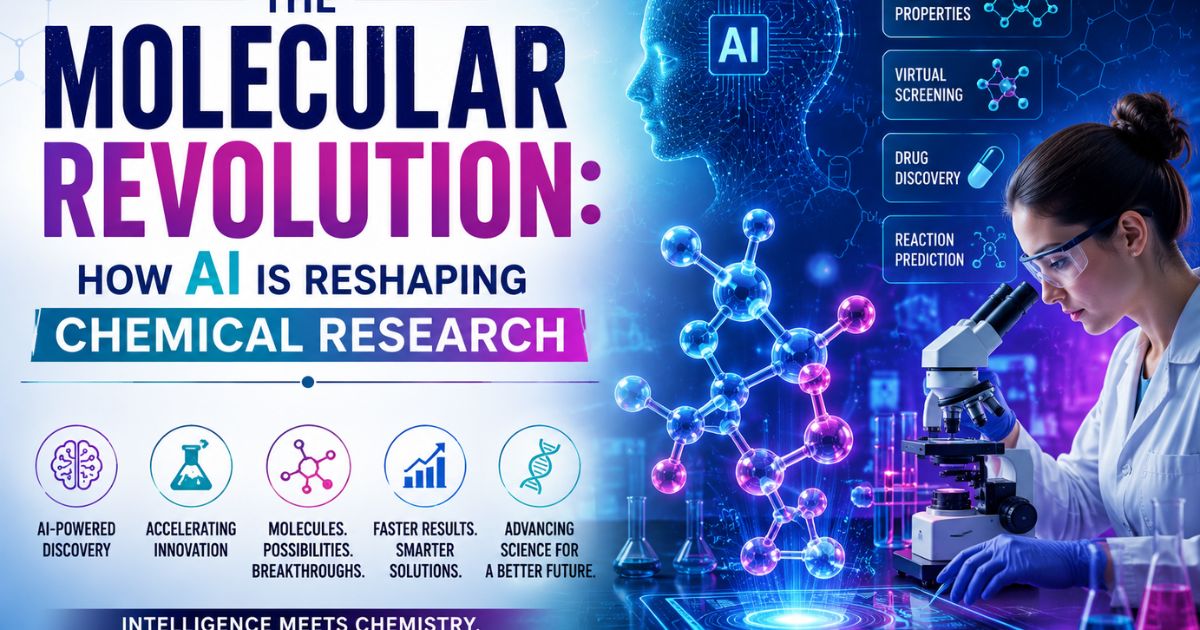
The Digitization of the Laboratory
The most profound shift in chemical research today is the move toward autonomous laboratories. Modern facilities are increasingly utilizing "AI Copilots"—sophisticated algorithms that act as the brain of the laboratory. These systems do more than record data; they actively optimize reaction pathways, predict the outcomes of complex molecular interactions, and even automate the physical synthesis of new compounds.
For researchers and students, this means that data literacy has become as essential as fundamental chemistry. Today's "hybrid scientist" must be adept at both bench-top synthesis and computational modeling. This digital integration allows for:
- Accelerated R&D Cycles: AI models can now screen billions of compounds in days rather than months, drastically reducing the "time-to-molecule."
- Green Chemistry by Design: AI is being used to optimize for "atom economy," ensuring that chemical processes produce minimal waste and maximum yield, aligning perfectly with the growing mandate for sustainable manufacturing.
- Predictive Safety: By monitoring sensors in real-time, AI systems can predict hazardous conditions—such as pressure spikes or gas leaks—long before they become incidents, making the modern chemical plant safer and more resilient than ever before.
AI as the Catalyst for Drug Discovery
Perhaps the most high-impact application of this synthesis is in the pharmaceutical sector. In 2026, we are seeing the results of early AI integration in drug discovery. By utilizing foundation models that analyze multi-omics data, scientists can pinpoint therapeutic targets with incredible precision, distinguishing between simple correlations and true causal links.
Generative models, including advanced diffusion and transformer architectures, are now creating novel chemical structures that are optimized for potency, stability, and synthetic feasibility from the start. This "physics-enabled" design process is turning the traditional ~90% failure rate in drug development into a more manageable, data-driven pipeline. We are currently witnessing the results of Phase III trials for several AI-designed drugs, which serve as the definitive litmus test for whether these digital architectures can deliver life-saving medicine at scale.
The New Strategic Force
Chemistry is currently being redefined as a "strategic force" that connects molecular insight with planetary challenges. From the development of biodegradable polymers derived from agricultural waste to the creation of ultra-efficient electrocatalysts for carbon dioxide reduction, the work being done in 2026 laboratories is central to global sustainability.
However, with this power comes the need for rigorous governance. As AI takes a more active role in the lab, researchers are increasingly focused on the reliability, transparency, and reproducibility of these systems. The goal for the modern researcher is to ensure that while the process of discovery is automated, the scientific integrity of the outcome remains human-verified and ethically sound.
Supporting Your Research Journey with Thesislikho.com
Whether you are delving into the mechanics of AI-driven synthesis or conducting complex material science research, the journey from hypothesis to a finished thesis is a monumental challenge. The technical complexity of 2026 research requires a level of oversight that often exceeds the capacity of individual researchers.
The team at Thesislikho.com is specifically structured to act as an extension of your own research capabilities, offering expert support across the scientific and engineering spectrum:
- Navigating Interdisciplinary Gaps: If your thesis bridges chemistry, AI, and industrial engineering, their experts help you construct a cohesive narrative that satisfies diverse academic committees.
- Statistical & Simulation Validation: From validating machine learning models in chemical reactors to ensuring the accuracy of your molecular simulations, they provide the technical depth required to uphold scientific rigor.
- Structuring High-Impact Documentation: They assist in drafting research that meets the standards of high-tier journals, ensuring your literature review, methodology, and results are clear, concise, and professional.
- Formatting & Submission Compliance: Whether you are following IEEE, RSC, or ACS standards, Thesislikho ensures every detail—from citation management to technical appendix formatting—is perfect for submission.
If you are currently at a critical juncture in your chemical research or engineering thesis, reaching out to the consultants at Thesislikho.com can provide the strategic clarity and technical support necessary to bring your work to a successful, high-impact conclusion.
As you look at the integration of AI into your own research work, what do you see as the greatest challenge in balancing autonomous discovery with the need for rigorous human verification?
This video provides an excellent visual overview of the game-changing trends and AI-driven innovations shaping the chemical industry this year.
Call / WhatsApp: +91 96438 02216
Visit:ThesisLikho.com