The Crisis of Governance in a Multipolar World
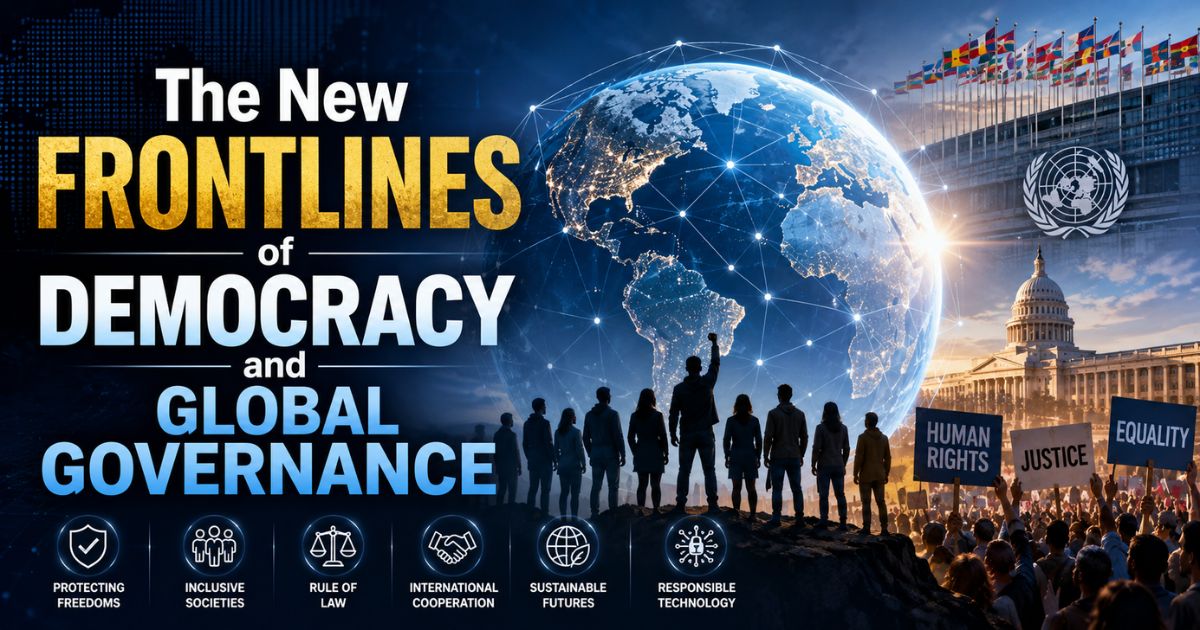
Recent publications, notably in Frontiers in Political Science (July 2026), have highlighted a dramatic shift in how we understand state resilience. The contemporary state is no longer just a legal entity defined by territory and sovereignty; it is a node in a complex, volatile network of global actors, multinational corporations, and non-state entities. Research by scholars is increasingly emphasizing the rise of "cognitive warfare"—a battlefield where information is not just relayed but actively manipulated to destabilize the very foundations of democratic trust.
The findings are stark: traditional democratic institutions are struggling to cope with the sheer speed and precision of digital disinformation. Whether it is examining the gendered crisis in South Korean democracy, the rise of populist movements in Europe, or the under-utilization of "soft power" in diplomatic relations, the academic focus has shifted toward strategic resilience. Scholars are investigating how states can maintain legitimacy while navigating the pressures of subnational resource conflicts and global economic shifts. The consensus is that we are in a period of "democratic backsliding," where the institutional safeguards of the 20th century are proving insufficient against the hybrid threats of the 21st.
The Academic Shift: From Observation to Intervention
The most exciting development in 2026 is the movement toward "applied political analysis." We are seeing researchers leave the quietude of the ivory tower to engage with real-world problems through data-driven methodologies. For instance, the use of longitudinal roll-call data to model party behavior, or field experiments on local school debating programs in Poland and India, demonstrates a growing desire to find scalable, practical solutions to democratic decay.
Researchers are now asking: "Why do some democracies recover after decline while others collapse into authoritarianism?" The answers are being sought in the micro-foundations of civic education, the architecture of political communication, and the resilience of frontline administrative agencies. However, this complexity creates a daunting task for PhD candidates and researchers. Writing a thesis in this climate requires more than just historical knowledge or normative theory; it demands mastery of quantitative methodology, big-data analysis, and an uncanny ability to synthesize disparate socio-political trends into a single, cohesive argument.
Elevating Your Political Science Research with Thesislikho.com
Whether you are exploring the nuances of international relations, the intricacies of comparative governance, or the digital threats to democratic stability, your research needs to be robust, evidence-backed, and methodologically sound. The transition from a broad interest in "politics" to a specific, researchable thesis is where most scholars falter.
Thesislikho.com is your strategic partner in this academic journey. We specialize in providing the depth and precision required for contemporary political science research:
- Custom Research Design: If you are struggling to narrow down a broad topic—such as "social media and politics"—into a focused, high-impact research question like "How do recommendation algorithms shape the long-term political beliefs of first-time voters?", our team provides the critical perspective needed to refine your hypothesis.
- Methodological Rigor: Political science today requires data precision. From helping you navigate complex survey experiments to structuring statistical models for public policy analysis, our experts ensure your work stands up to the highest peer-review standards.
- Literature Synthesis: With the sheer volume of political literature being published, Thesislikho helps you conduct exhaustive, annotated literature reviews, ensuring your work engages with the latest Q1/SCI-indexed debates.
- Editorial Excellence: We assist in drafting synopses, refining your arguments for academic journals, and ensuring your thesis follows the strict formatting requirements (APA, Chicago, Turabian, etc.) of your university.
If you are currently developing your thesis on the future of governance, democracy, or international affairs, don't face these analytical challenges alone. Connect with the team at Thesislikho.com to transform your research from a collection of raw data into a profound academic contribution that shapes the field.
As you approach your research, how do you see the role of digital sovereignty changing the traditional definition of a "nation-state" in the coming decade?
Call / WhatsApp: +91 96438 02216
Visit:ThesisLikho.com